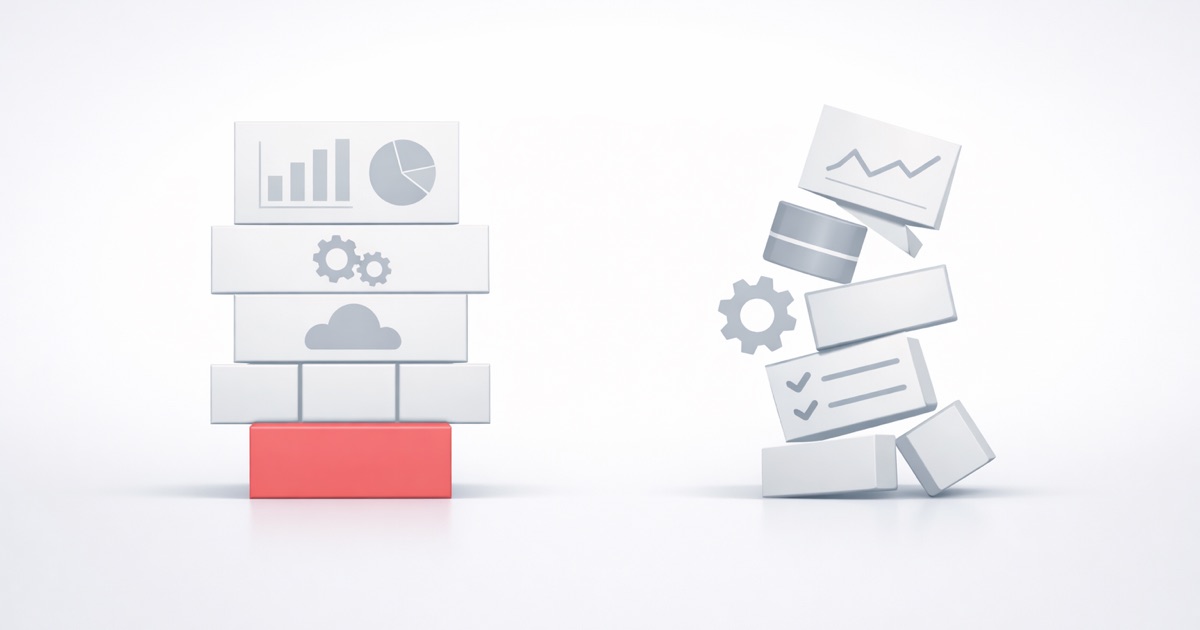
The Business Case for Data Quality
Data quality is not a technical nice-to-have. It is a business imperative that directly affects revenue, efficiency, and competitive advantage.
This guide presents the business case for data quality investment, with specific focus on why AI initiatives make data quality more urgent than ever.
The Cost of Poor Data Quality
Revenue Impact
Organizations lose significant revenue due to poor data quality:
| Source | Finding |
|---|---|
| MIT Sloan Management Review (Redman, 2017) | 15-25% of revenue lost annually to poor data quality |
| IBM estimate, cited in Harvard Business Review (2016) | Bad data costs the US economy $3.1 trillion per year |
| Gartner (2020) | Average $12.9M annual loss per organization |
The quality baseline is worse than most teams assume. A Harvard Business Review study by Nagle, Redman, and Sammon (2017) found that 47% of newly created data records contain at least one critical error, and only 3% of companies’ data meets basic quality standards.
These losses come from:
- Marketing campaigns sent to wrong addresses
- Sales teams working duplicate leads without context
- Missed opportunities due to outdated contact information
- Inaccurate forecasting leading to poor resource allocation
Productivity Drain
Employees spend substantial time compensating for bad data:
- 50% of knowledge workers’ time is wasted in “hidden data factories” — hunting for data, finding and correcting errors, and searching for confirmatory sources for data they don’t trust (Harvard Business Review, 2016)
- ~546 hours per year per sales representative lost to chasing bad data instead of selling (ZoomInfo)
- 60% of sellers’ time goes to non-selling tasks such as manual CRM data entry and hunting for information (Salesforce State of Sales)
This time is not spent selling, serving customers, or creating value.
Real-World Failures
Data quality failures have caused significant business damage:
| Company | Issue | Impact |
|---|---|---|
| Unity Technologies (2022) | Faulty data corrupted ML training | $110M lost revenue |
| Equifax (2022) | Inaccurate credit scores | $725K+ in settlements |
| Samsung Securities (2018) | Data entry error | Billions in duplicate shares issued |
These examples show that data quality failures are not abstract. They create concrete financial and reputational damage.
The AI Amplification Effect
AI investment is growing rapidly. Gartner forecasts AI spending will surpass $2 trillion in 2026, with 37% year-over-year growth.
When AI investment scales, the cost of poor data quality scales with it.
Why AI Raises the Stakes
Traditional applications can tolerate some data issues. A report with 5% missing data is still 95% useful. But AI applications are different:
| Traditional App | AI Application |
|---|---|
| Shows what you told it | Learns patterns from your data |
| Tolerates gaps | Learns from gaps (incorrectly) |
| One bad record = one problem | One bad pattern = many wrong outputs |
| Errors visible to humans | Errors hidden in model behavior |
The Agentforce Connection
Salesforce Agentforce uses your CRM data to inform AI responses. When an agent retrieves customer information, it relies on what exists in Salesforce.
If your data has problems, so does your agent:
| Data Problem | Agent Failure |
|---|---|
| Missing contact information | Agent cannot reach customers |
| Duplicate records | Agent has conflicting information |
| Stale opportunity dates | Agent makes outdated recommendations |
| Inconsistent values | Agent treats same entity as different |
| PII in text fields | Agent exposes sensitive information |
Research shows that 45% of business leaders cite concerns about data accuracy or bias as the leading barrier to scaling AI initiatives (IBM 2025).
Making the Case to Leadership
When presenting data quality investment to leadership, focus on business outcomes, not technical details.
Frame the Problem
Start with the business impact they care about:
- Revenue protection: “We lose X% of revenue to data issues”
- Efficiency gains: “Teams spend Y hours per week on data cleanup”
- AI readiness: “Our Agentforce investment depends on data quality”
- Risk reduction: “Data errors create compliance and reputation risk”
Quantify the Opportunity
Use your own data where possible:
- Count duplicate records in your CRM
- Measure fill rates on critical fields
- Calculate time spent on data cleanup
- Track deals lost due to data issues
If you do not have these numbers, that is the first problem to solve. You cannot improve what you do not measure.
Propose a Starting Point
Do not ask for a massive data quality program. Propose a focused first step:
- Take the AI Readiness Assessment to establish a baseline
- Identify 3-5 high-priority fields to improve
- Measure improvement over 90 days
- Expand based on results
The ROI of Data Quality
Organizations that invest in data quality see measurable returns:
| Investment Area | Expected Return |
|---|---|
| Duplicate prevention | Reduced storage costs, cleaner reports |
| Completeness improvement | Higher email deliverability, better automation |
| Validity enforcement | Fewer bounced communications |
| Timeliness monitoring | More accurate forecasting |
| Consistency standardization | Better AI model performance |
The key is to pick specific, measurable improvements rather than pursuing “perfect data” as an abstract goal.
Why Now?
Three trends make data quality investment urgent:
1. AI Adoption is Accelerating
Organizations are deploying AI faster than ever. Those with clean data will succeed. Those without will struggle.
2. The Gap is Widening
Organizations with good data practices are pulling ahead. Each quarter of delay increases the catch-up effort.
3. Fixing Later Costs More
Data quality debt compounds. The longer you wait, the more records accumulate issues, and the harder cleanup becomes.
Next Steps
- Assess your current state: Take the AI Readiness Assessment to get a baseline score
- Understand the framework: Read about The Five Dimensions DQS measures
- Learn about AI requirements: See the Agentforce Preparation Guide for deployment readiness
- Get started with DQS: Read the Quick Start Guide
Sources:
- Seizing Opportunity in Data Quality — MIT Sloan Management Review, 2017
- Bad Data Costs the U.S. $3 Trillion Per Year — Harvard Business Review, 2016
- Only 3% of Companies’ Data Meets Basic Quality Standards — Harvard Business Review, 2017
- Data Quality: Why It Matters and How to Achieve It — Gartner
- IBM Institute for Business Value: The Cost of Poor Data Quality
- State of Sales — Salesforce